The Centre earned nearly Rs 8.02 lakh crore from taxes on petrol and diesel during the last three fiscal years, of which more than Rs 3.71 lakh crore was collected in FY21 alone, Finance Minister Nirmala Sitharaman informed Parliament on Tuesday. The minister was responding to queries on the hike in excise duty on petrol and diesel during last three years and the details of the revenue earned through various taxes on these fuels. The excise duty on petrol rose from Rs 19.48 per litre as on October 5, 2018 to Rs 27.90 a litre as on November 4, 2021.
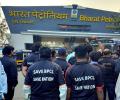
The divestment of Bharat Petroleum Corporation (BPCL) may hit a fuel price hurdle, according to officials dealing with the matter. They pointed out that the inconspicuous administered price regime could hamper the prospects for potential buyers of BPCL. A senior oil ministry official said public-sector oil-marketing companies (OMCs) take a hit when they sell petrol, diesel, and liquefied petroleum gas (LPG), three of the most popular petroleum products in the country.

'Any finality in such matters requires political views. We will review it closer to the full Budget.'
A rise in petrol and diesel consumption can help the government cut cesses on the fuels by Rs 4.5 a litre without impacting revenue collections of FY21, and help cool off the pressure on inflation, domestic rating agency ICRA said on Friday. Petrol consumption is estimated to increase 14 per cent in 2021-22 and diesel by 10 per cent on the lower base, rise in mobility and economic recovery, ICRA said. The rating agency added that it will result in an additional Rs 40,000 crore in revenue for the government through higher collections of the cess.

Despite failing to secure a simple majority in Parliament, we will continue to see him on TV, newspapers, magazines, bill boards, vaccination certificates, railway stations, bus shelters, airports, sea ports, on the highway and on rural roads, sighs A Ganesh Nadar.
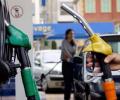
Petrol and diesel prices were cut by Rs 2 per litre each as state-owned oil companies ended a nearly two-year-long hiatus in rate revision, just hours before the general election schedule was announced.

The wholesale price-based inflation rose for the second consecutive month in February to 4.17 per cent, as food, fuel and power prices spiked. The WPI inflation was 2.03 per cent in January and 2.26 per cent in February last year. After witnessing months of softening of prices, the food articles in February saw 1.36 per cent inflation. In January it was (-) 2.80 per cent.

Several BJP-backed state governments have unveiled schemes targeting the poor, women, farmers and students, following the party's setback in the Lok Sabha polls.

Finance Minister Arun Jaitley said the excise duty cut would have an impact of Rs 10,500 crore on central government's tax revenues.
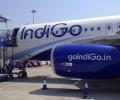
The country's largest airline IndiGo on Thursday reported more than doubling of its net profit to Rs 1,894.8 crore in the three months ended March 2024 and announced the introduction of business class in select routes this year. The strong performance in the latest March quarter, which also marks six consecutive quarters of profitability, was fuelled by higher traffic, increased capacity and a favourable external environment.

Economic stagnation is the advance payment for polarisation, which extracts a terrible price.

State-run Indian Oil Corporation (IOCL) reported a weak performance in the fourth quarter of FY24 (January-March 2024), and the turmoil in the energy market indicates it could endure another lacklustre quarter. The oil marketing company (OMC) reported an Ebitda of Rs 10,400 crore, down 27 per cent year-on-year (Y-o-Y) due to weak reported gross refining margin (GRM) of $8.4 per barrel in Q4FY24, which was almost half the consensus expectation of $15 per barrel.

The government on Tuesday raised the deposit threshold limit to Rs 5 lakh per annum in provident fund for which interest would continue to be tax-exempt.

India's fuel demand in May slumped to its lowest in nine months as restrictions to curb the second wave of COVID infections stalled mobility and muted economic activity. Fuel demand fell 1.5 per cent to 15.1 million tonnes despite the low base of May 2020 and was down 11.3 per cent when compared to the previous month, according to data from the Petroleum Planning and Analysis Cell (PPAC) of the oil ministry. India was under one of the world's strictest lockdowns in May last year, which brought all mobility and economic activity to a grinding halt.
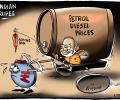
Despite a massive decline in crude oil prices since 2012 -- Modi has been prime minister in six of these eight years -- petrol in Delhi has become 10 per cent costlier and diesel 97 per cent, as of July 2.
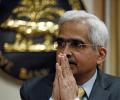
Reserve Bank Governor Shaktikanta Das on Wednesday ruled out upside risks to the 5.3 per cent inflation forecast for the current fiscal, saying the recent cut in excise duty on diesel and petrol as well as better management of supply-side issues on the food front have contained inflationary expectations. These measures are significantly positive for inflation management, he said. After months of calls for reducing taxes on fuels, the government, last week, cut the excise duty on diesel and petrol by Rs 10 and Rs 5 per litre, respectively.

The Maharashtra government has decided to reduce the value added tax (VAT) on petrol and diesel by Rs 5 and Rs 3 per litre respectively, Chief Minister Eknath Shinde said in Mumbai on Thursday.
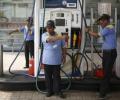
State-owned fuel retailers are losing close to Rs 3 per litre on selling diesel while the profit on petrol has trimmed due to recent firming up in international oil prices, industry officials said detailing reasons for continuing to hold retail prices. Indian Oil Corporation (IOC), Bharat Petroleum Corporation Ltd (BPCL) and Hindustan Petroleum Corporation Ltd (HPCL), who control roughly 90 per cent of India's fuel market, 'voluntarily' have not changed petrol, diesel and cooking gas (LPG) prices for almost two years now, resulting in losses when input cost was higher and profits when raw material prices were lower.

Flagging higher fuel prices in many opposition-ruled states, Prime Minister Narendra Modi on Wednesday called it "injustice" to people living there and urged the governments there to reduce VAT in "national interest" to benefit the common man. Modi raised the issue of many states not adhering to the Centre's call for reducing the Value Added Tax (VAT) on petrol and diesel after his government slashed excise duties on them in November last, and asked them to work in the spirit of cooperative federalism in this time of global crisis. Higher prices in some states were also harmful for neighbouring states, he added.

'The consensus was that the debate was between looking backward and looking forward.' 'Trump, with his great enamourment of his own 'achievements,' was obviously looking backward, while Harris, nearly 20 years his junior, was focussing on the future, with hope,' notes Shreekant Sambrani.

The Congress took out marches and observed bandh at several places on Saturday to protest against rising fuel prices.
This is the second straight increase in ATF price this month. Rates were hiked by a record 56.5 per cent (Rs 12,126.75 per kl) on June 1. Simultaneously, petrol and diesel prices were hiked for the 10th day in a row.

Hybrids have helped Maruti acquire leadership in SUVs, a segment that was never its forte. Toyota has also risen with the hybrid tide to clock its highest-ever annual sales in 2023.
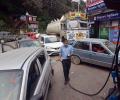
India's appetite for imported crude oil may wane in fiscal year (FY) 2023 from record levels in pre-pandemic 2019-20 fiscal as higher oil prices, a spillover from the conflict in Ukraine, and increasing use of biofuels affect domestic demand for petroleum products. Brent crude surged to a nine-year high, shy of a July 2008 record $147.50 a barrel, before declining to around $100 a barrel - but the volatility in commodity rates will slow global economic growth and use of fuels. Demand for all oil products may grow at only 2-3 per cent in FY23, slower than the current fiscal and nearly half the 5.5 per cent growth estimated by the petroleum ministry, according to industry officials.

The Centre expects cooperation from the state governments to slash the surcharge and taxation on aviation fuel to control its prices, a senior Civil Aviation Ministry official said in New Delhi on Thursday.
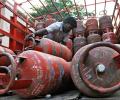
Prime Minister Narendra Modi on Friday announced a Rs 100 per cylinder cut in cooking gas LPG price to ease financial burden on households. Non-subsidised cooking gas price will be cut to Rs 803 per 14.2-kg cylinder in the national capital with effect from midnight of Friday/Saturday, official sources said. Prices vary from state to state depending on the incidence on local taxes.

Finance Minister Nirmala Sitharaman on Thursday announced a Rs 11.11 lakh crore spending on infrastructure and vowed to continue reforms as she resisted resorting to populist measures in Modi government's last Budget before general elections, instead choosing to stay on the path of cutting deficit while bolstering measures for focus groups.

Oravel Stays, the parent company behind the travel tech brand Oyo, is eyeing to clock Rs 100 crore in Q4FY24 profit after tax (PAT) and a 20 per cent revenue growth for FY24, according to informed sources. These numbers were part of an internal review meeting between founder Ritesh Agarwal and senior management earlier this week, where he spoke about the company's profitability trajectory and growth in business.

The Big Four accounting firms have increased the hiring of people from technology backgrounds in India amid an increased focus of clients on digital transformation, especially after the Covid-19 pandemic. EY India said that it has expanded its overall tech talent pool by 3x in the last three years across service lines including consulting, tax, assurance, and strategy & transactions. "Today over 50 per cent of our workforce is from STEM (science, technology, engineering and mathematics) and technology background," it said, adding that it continues to hire significantly in the areas of AI, cloud computing, data analytics and cybersecurity to help its clients in transformation.

In the first reduction in rate in two months, jet fuel or ATF price on Thursday was cut by 3 per cent in line with softening international crude oil prices. Aviation turbine fuel (ATF) price was reduced by Rs 1,887 per kilolitre, or 3 per cent, to Rs 58,374.16 per kl in the national capital, according to a price notification of state-owned fuel retailers. This is the first reduction in rates after four rounds of increase since February. Rates were increased by Rs 3,246.75 per kl on February 1, followed by a 3.6 per cent hike on February 16, and a steep 6.5 per cent raise on March 1. On March 16, prices were again raised by Rs 860.25 per kl. On Thursday, a Rs 10 per cylinder reduction in price of domestic cooking gas LPG also came into effect.

'China is struggling to get out of its property bubble.' 'Japan took 35 years to walk out of its equity bubble.' 'Bubbles can be difficult to forecast.'

When it comes to electric cars, the electric dream is turning out to be a six-letter word starting with f, ending with y, and having antas in between, notes Suveen Sinha.

Lower crude oil costs and higher marketing margins are expected to raise the fortunes of oil marketing companies (OMCs) in the first quarter (Q1) of 2023-24 (FY24), while city gas distribution (CGD) companies could also benefit from lower spot prices of liquefied natural gas (LNG). However, in a break from the past, growth trends are expected to diverge for various segments within the broad energy sector. Analysts expect the earnings from gas production to go down for upstream national oil and gas companies such as Oil and Natural Gas Corporation (ONGC) and Oil India (OIL) due to the introduction of the new domestic gas pricing regime on April 1. After showing steep losses over the first half of 2022-23 (FY23), the marketing margins of OMCs have steadily recovered in four months.

Aviation turbine fuel or jet fuel price was on Wednesday hiked by a steep 9.2 per cent, while that of non-subsidised cooking gas was raised by Rs 21 per cylinder.
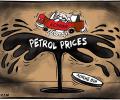
Petrol and diesel prices on Thursday climbed to fresh highs in the country as rates were hiked by the most in recent times, even as fuel retailers said the government can cut taxes to ease consumer burden. Petrol and diesel price was hiked by 35 paise per litre each after a gap of a week, according to price notification of state-owned fuel retailers. The increase took petrol prices to a fresh high of Rs 86.65 a litre in Delhi and to Rs 93.20 in Mumbai.

Reliance Industries Ltd on Friday reported a 27 per cent jump in its September quarter net profit as earnings from the oil and gas business rebounded, and a pick-up in fashion and grocery helped boost retail revenues. The oil-to-retail-to-telecom conglomerate's consolidated net profit of Rs 17,394 crore, or Rs 25.71 per share, in July-September - the second quarter of the current 2023-24 fiscal - was 27.3 per cent higher than Rs 13,656 crore, or Rs 19.92 a share, earning a year back, the company said in a statement. The net profit was also higher quarter-on-quarter compared to Rs 16,011 crore earnings in the preceding three months ended June 30.
In Budget 2015, the finance minister has opted to take the slow road and has doubled the cess on coal to "balance the need to tax pollution and the price of power" in his words.
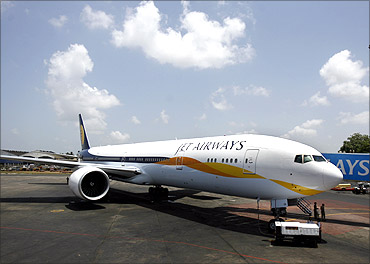
ATF price in Delhi was reduced by Rs 4,765.5 per kilolitre (kl), or 11.9 per cent.

Aviation turbine fuel accounts for 35-40 per cent of the total operating cost of an Indian airline.
 © 2026 Rediff.com - Investor Information - Advertise with us - Disclaimer - Privacy Policy - Sitemap - Feedback - About us - Terms of use - Grievances